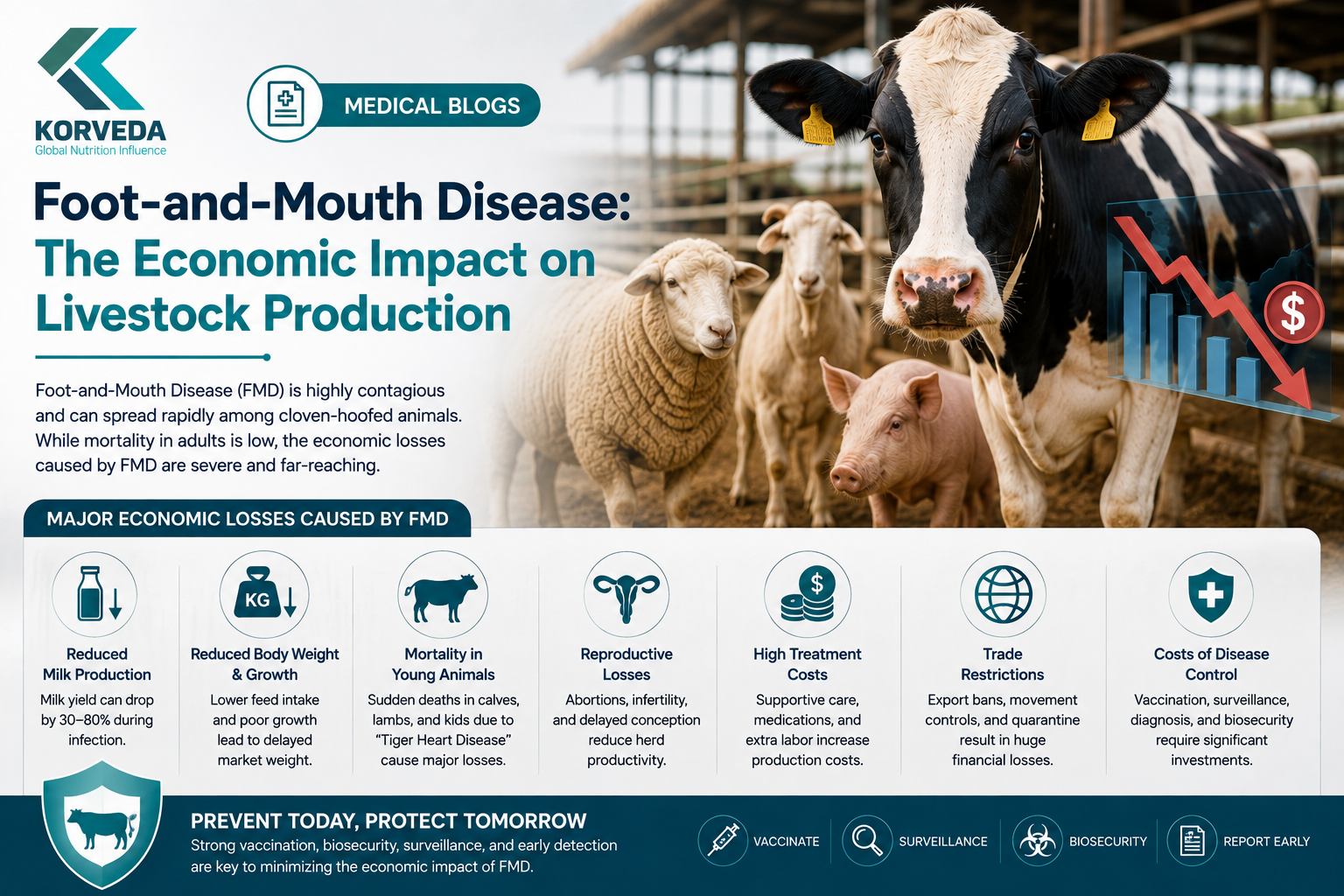
Foot-and-Mouth Disease: The Economic Impact on Livestock Production
Introduction
Foot-and-Mouth Disease (FMD) is one of the most contagious viral diseases affecting cloven-hoofed animals, including cattle, buffaloes, sheep, goats, and pigs. Caused by the Foot-and-Mouth Disease Virus (FMDV) of the genus Aphthovirus (family Picornaviridae), the disease spreads rapidly through direct contact, aerosols, contaminated equipment, vehicles, feed, and animal products.
Although adult mortality is generally low, FMD causes devastating economic losses due to reduced productivity, high morbidity, trade restrictions, and the substantial costs associated with disease control and vaccination.
Why is Foot-and-Mouth Disease So Economically Important?
FMD outbreaks can spread through entire herds within days, affecting nearly all susceptible animals. Even after clinical recovery, many animals require weeks or months to regain their previous production levels.
The disease impacts every sector of livestock production, including dairy, beef, breeding, and international trade.
Major Economic Losses Caused by FMD
- Significant Milk Production Loss
One of the earliest consequences of FMD infection is a dramatic decline in milk yield.
Affected dairy cows often experience:
- Reduced feed intake.
- Fever-induced metabolic stress.
- Painful oral lesions that interfere with eating and drinking.
- Mastitis secondary to teat lesions.
Milk production may decrease by 30–80% during acute infection, and full recovery is not always achieved.
- Reduced Body Weight and Growth Performance
Animals with FMD eat less because painful mouth ulcers make chewing difficult.
Consequently:
- Average Daily Gain (ADG) decreases.
- Feed conversion efficiency worsens.
- Beef cattle require longer finishing periods.
- Market weight is delayed.
Young growing animals are particularly vulnerable to permanent production setbacks.
- Mortality in Young Animals
Although adult animals usually survive, calves, lambs, and kids are highly susceptible to viral myocarditis (“Tiger Heart Disease”), which can cause sudden death even before typical mouth lesions develop.
Losses in young stock can significantly reduce future herd replacement.
- Reproductive Losses
FMD negatively affects reproductive performance by causing:
- Abortions.
- Temporary infertility.
- Delayed estrus.
- Reduced conception rates.
- Poor semen quality in breeding bulls.
These reproductive losses extend the calving interval and reduce herd productivity.
- Long-Term Productivity Decline
Recovered animals may continue to show:
- Lower milk yield.
- Chronic lameness.
- Reduced fertility.
- Poor body condition.
- Lower market value.
Some animals never fully regain their previous production potential.
- Increased Veterinary and Treatment Costs
Although there is no specific antiviral treatment, infected animals require supportive care, including:
- Anti-inflammatory medications.
- Antibiotics for secondary bacterial infections.
- Fluid and electrolyte therapy.
- Vitamin and mineral supplementation.
- Additional labor and nursing care.
These expenses substantially increase production costs during outbreaks.
- Trade Restrictions
Countries affected by FMD frequently face:
- Export bans on live animals.
- Restrictions on meat and dairy exports.
- Quarantine measures.
- Animal movement controls.
These restrictions may result in losses worth millions of dollars at the national level.
- Costs of Disease Control
Controlling FMD outbreaks requires major investments in:
- Emergency vaccination campaigns.
- Laboratory diagnosis.
- Surveillance programs.
- Biosecurity measures.
- Disinfection and sanitation.
- Farmer compensation in some control programs.
- Medical Blogs
- August 29, 2026
You may also like
Other related posts

Recent Comments