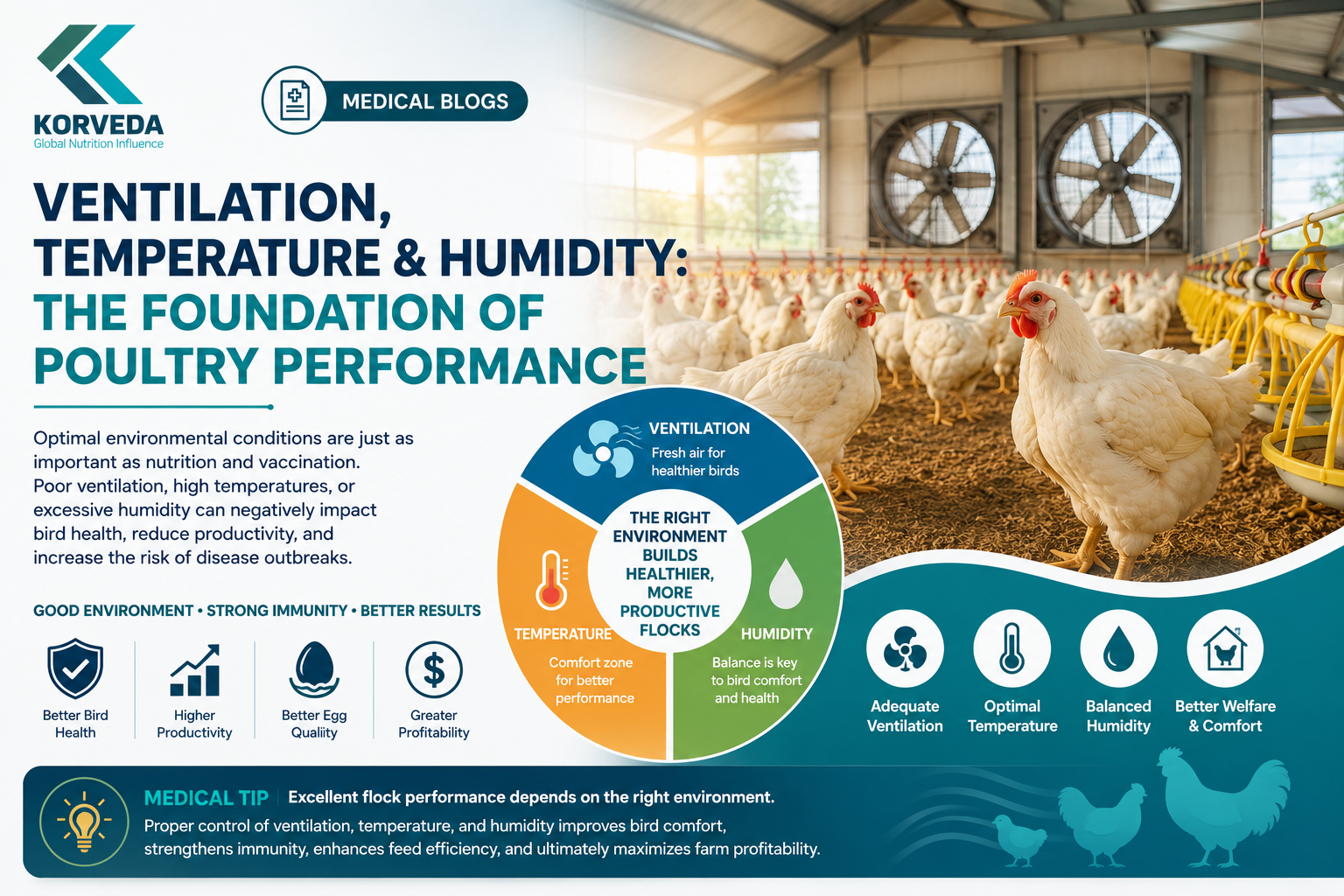
Ventilation, Temperature & Humidity: The Foundation of Poultry Performance
Optimal environmental conditions are just as important as nutrition and vaccination. Poor ventilation, high temperatures, or excessive humidity can negatively impact bird health, reduce productivity, and increase the risk of disease outbreaks.
Ventilation: More Than Fresh Air
Proper ventilation helps to:
- Supply fresh oxygen.
- Remove excess carbon dioxide (CO₂).
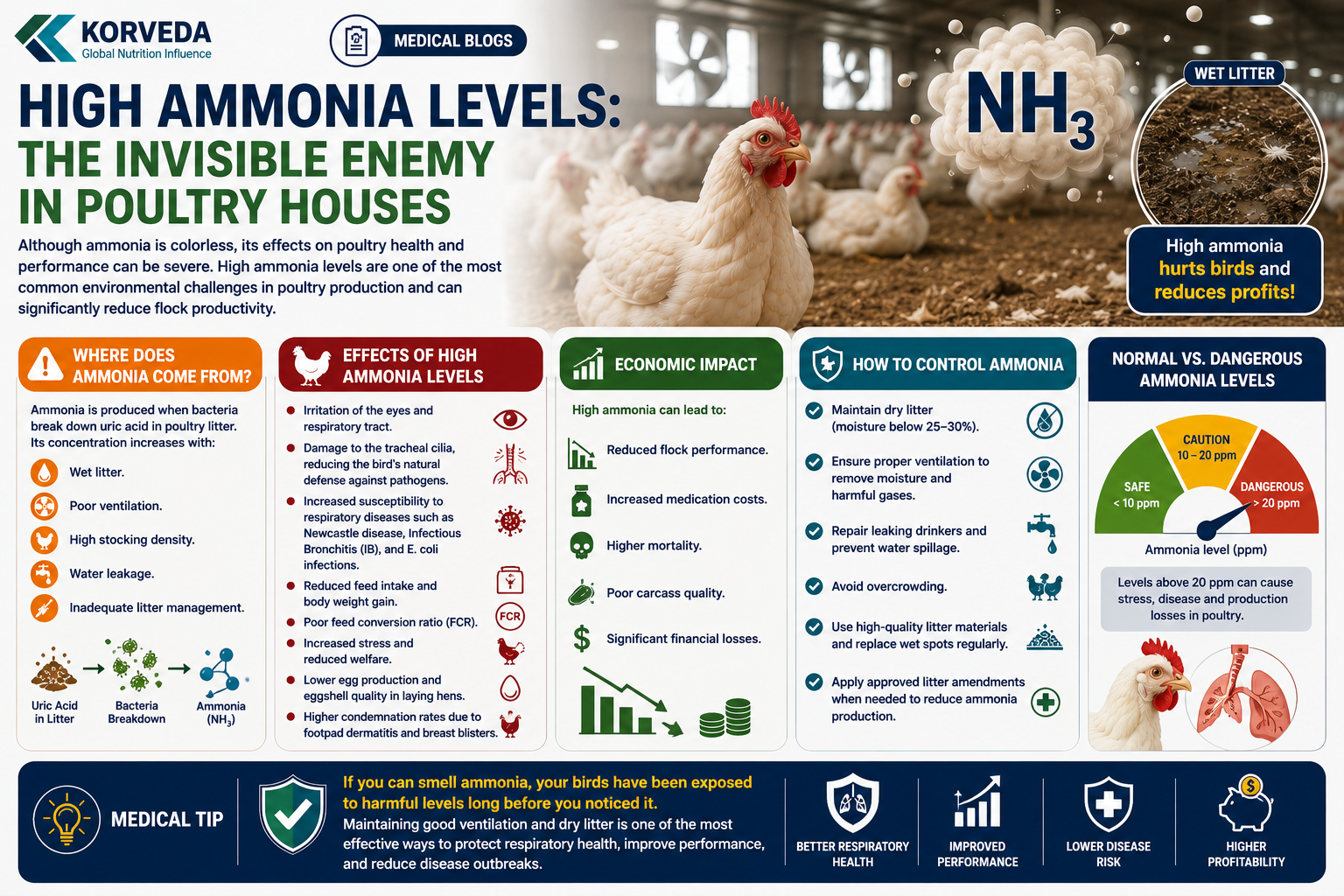
- Reduce ammonia and other harmful gases.
- Control moisture inside the poultry house.
- Maintain a comfortable temperature.
- Improve litter quality and bird welfare.
🌡️ Temperature: Keeping Birds in Their Comfort Zone
When temperatures rise above the birds’ comfort range:
- Feed intake decreases.
- Water consumption increases.
- Growth rate slows.
- Feed conversion ratio (FCR) worsens.
- Egg production and shell quality decline.
- Heat stress and mortality increase.
When temperatures are too low:
- Birds consume more feed for maintenance instead of growth.
- Chilling and respiratory diseases become more common.
- Production efficiency decreases.
💧 Humidity: The Hidden Environmental Factor
High humidity can:
- Reduce the birds’ ability to lose body heat.
- Increase heat stress during hot weather.
- Promote wet litter and ammonia production.
- Increase the risk of respiratory and enteric diseases.
Very low humidity may:
- Increase dust levels.
- Irritate the respiratory tract.
- Reduce bird comfort.
Impact on Production
Poor environmental management can lead to:
- Reduced body weight gain.
- Poor feed conversion efficiency.
- Lower egg production and egg quality.
- Increased respiratory diseases.
- Higher mortality rates.
- Greater medication and management costs.
Best Management Practices
✔ Maintain adequate ventilation throughout the production cycle.
✔ Monitor house temperature and humidity daily.
✔ Prevent ammonia accumulation by keeping litter dry.
✔ Adjust ventilation according to bird age, stocking density, and seasonal weather.
✔ Ensure continuous access to clean, cool drinking water.
✔ Minimize environmental stress to support immunity and maximize productivity.
💡 Medical Tip
Excellent flock performance depends on the right environment. Proper control of ventilation, temperature, and humidity improves bird comfort, strengthens immunity, enhances feed efficiency, and ultimately maximizes farm profitability.
- Medical Blogs
- August 29, 2026
You may also like
Other related posts

Recent Comments