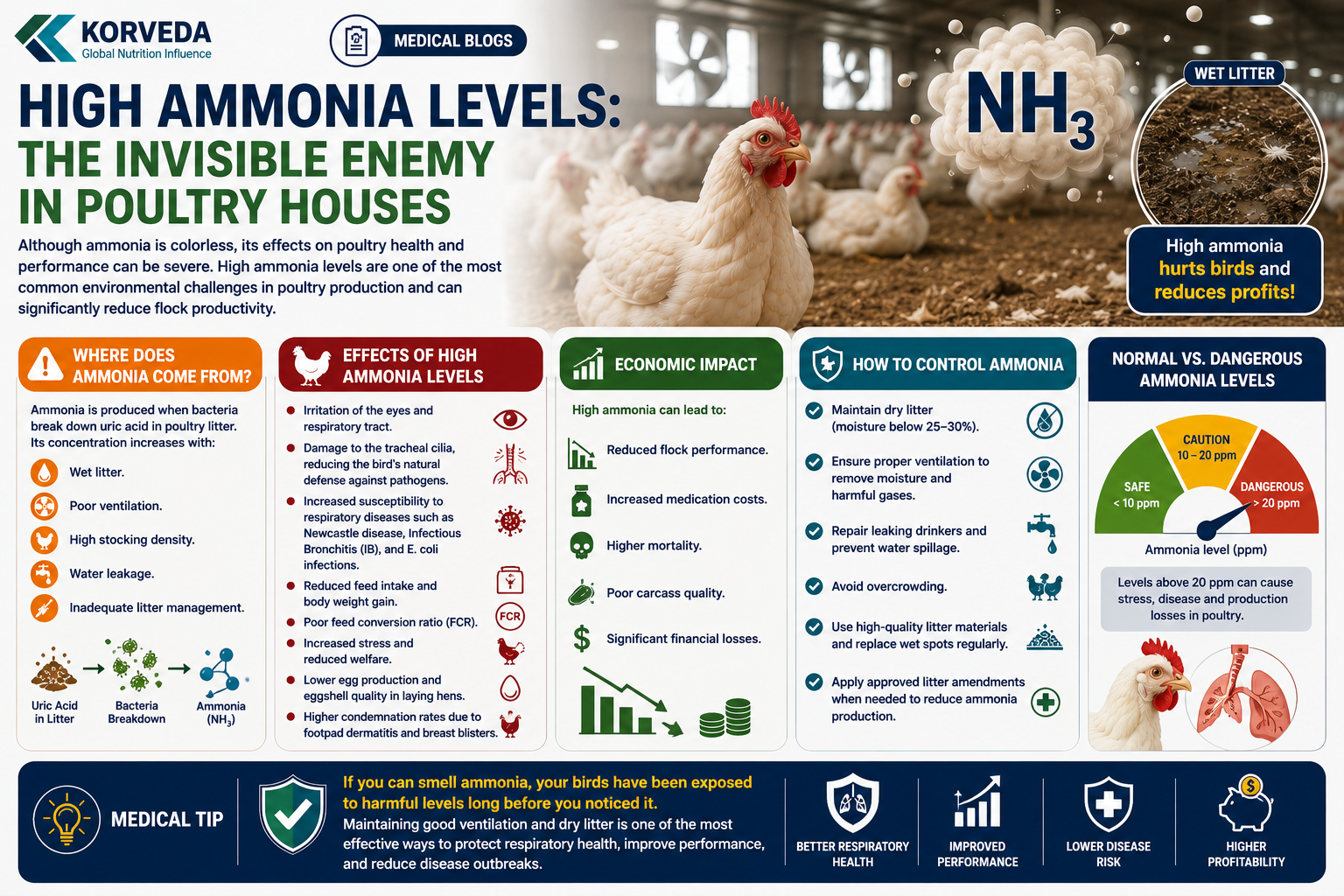
High Ammonia Levels: The Invisible Enemy in Poultry Houses
Although ammonia is colorless, its effects on poultry health and performance can be severe. High ammonia levels are one of the most common environmental challenges in poultry production and can significantly reduce flock productivity.
⚠️ Where Does Ammonia Come From?
Ammonia is produced when bacteria break down uric acid in poultry litter. Its concentration increases with:
- Wet litter.
- Poor ventilation.
- High stocking density.
- Water leakage.
- Inadequate litter management.
🐔 Effects of High Ammonia Levels
- Irritation of the eyes and respiratory tract.
- Damage to the tracheal cilia, reducing the bird’s natural defense against pathogens.
- Increased susceptibility to respiratory diseases such as Newcastle disease, Infectious Bronchitis (IB), and E. coli infections.
- Reduced feed intake and body weight gain.
- Poor feed conversion ratio (FCR).
- Increased stress and reduced welfare.
- Lower egg production and eggshell quality in laying hens.
- Higher condemnation rates due to footpad dermatitis and breast blisters.
📉 Economic Impact
High ammonia can lead to:
- Reduced flock performance.
- Increased medication costs.
- Higher mortality.
- Poor carcass quality.
- Significant financial losses.
🛡️ How to Control Ammonia
✔ Maintain dry litter (moisture below 25–30%).
✔ Ensure proper ventilation to remove moisture and harmful gases.
✔ Repair leaking drinkers and prevent water spillage.
✔ Avoid overcrowding.
✔ Use high-quality litter materials and replace wet spots regularly.
✔ Apply approved litter amendments when needed to reduce ammonia production.
💡 Medical Tip
If you can smell ammonia, your birds have been exposed to harmful levels long before you noticed it. Maintaining good ventilation and dry litter is one of the most effective ways to protect respiratory health, improve performance, and reduce disease outbreaks.
- Medical Blogs
- August 29, 2026
You may also like
Other related posts

Recent Comments