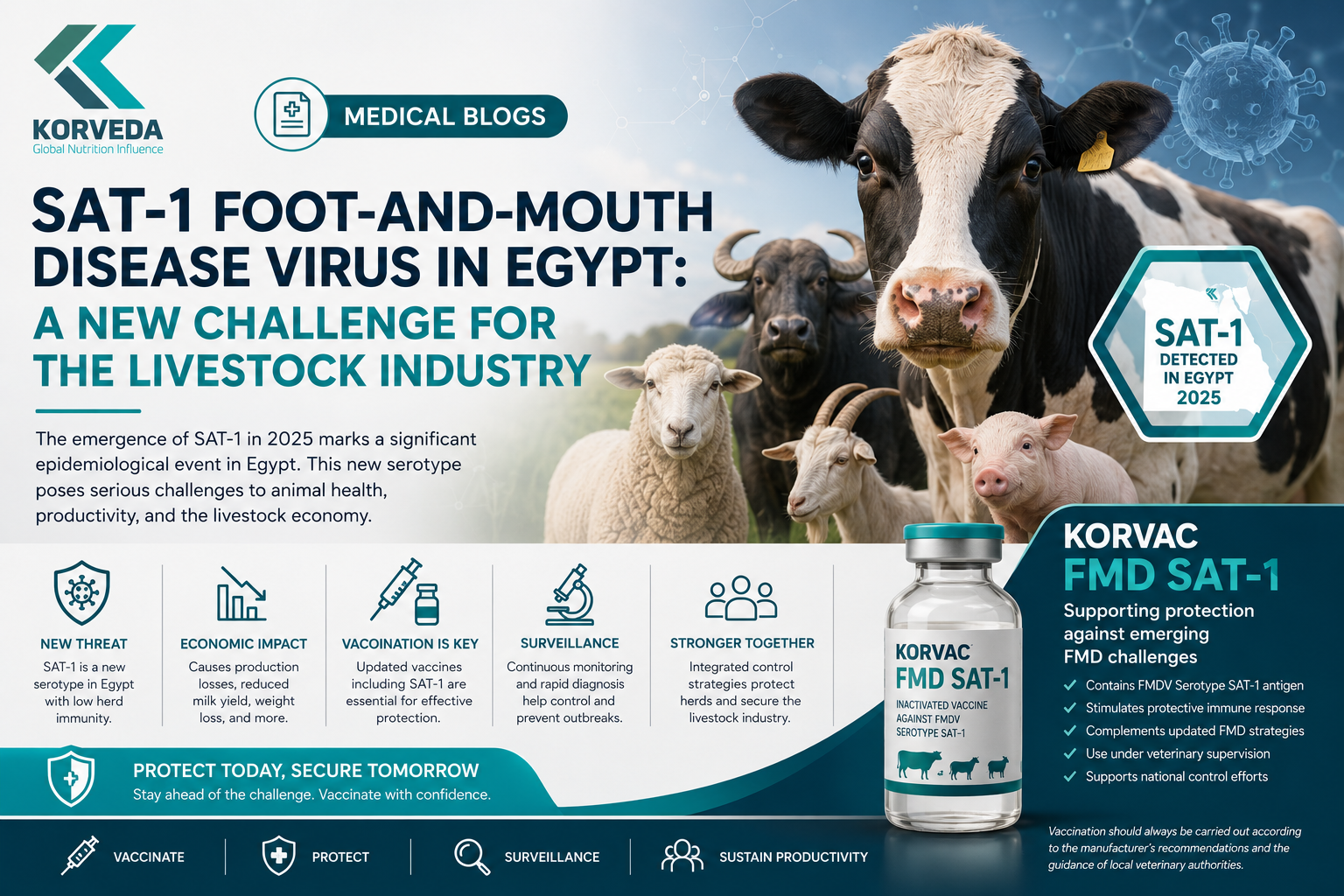
SAT-1 Foot-and-Mouth Disease Virus in Egypt: A New Challenge for the Livestock Industry
Introduction
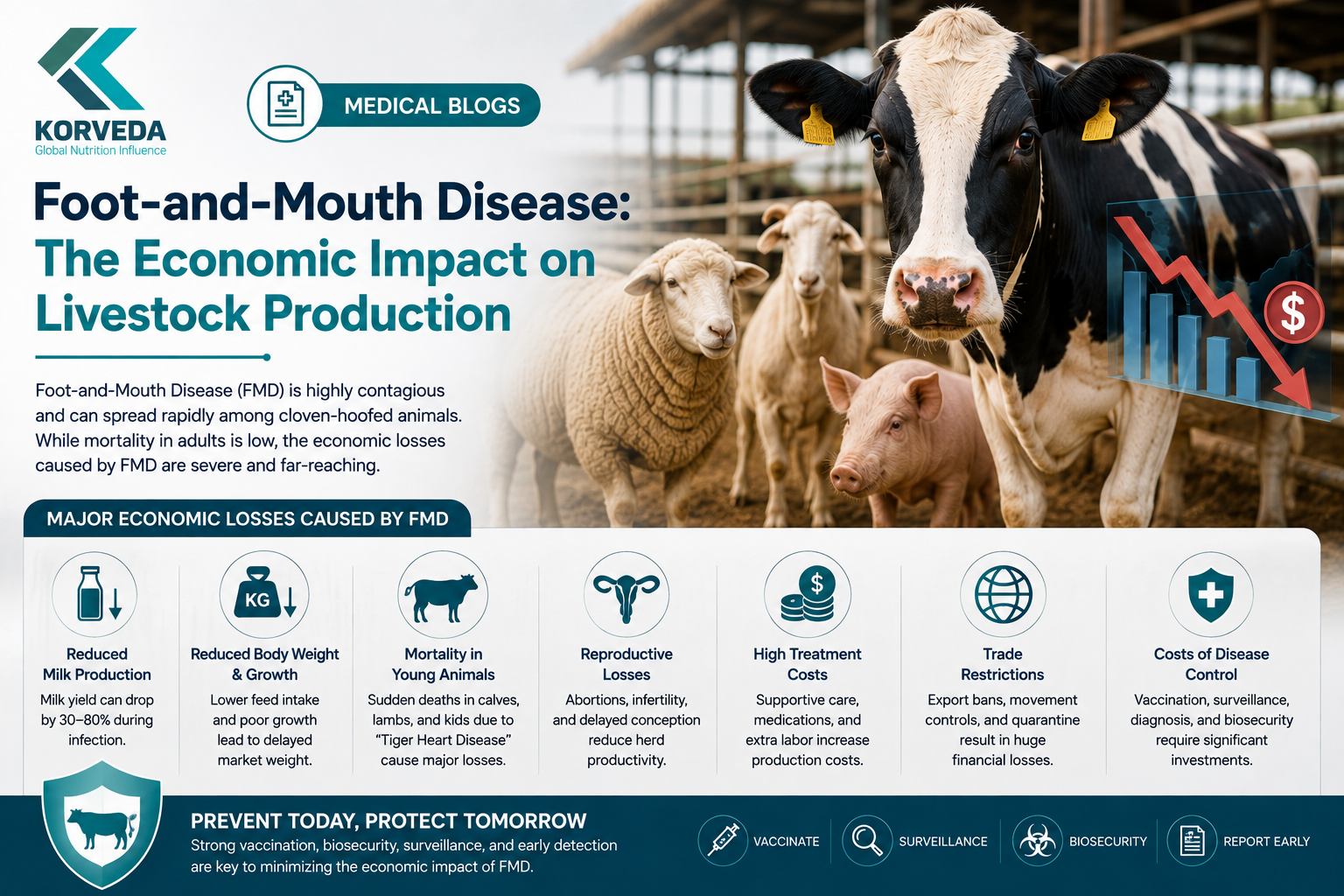
Foot-and-Mouth Disease (FMD) remains one of the most economically devastating viral diseases affecting cloven-hoofed animals, including cattle, buffaloes, sheep, goats, and pigs. The disease causes severe production losses through reduced milk yield, weight loss, reproductive problems, and mortality in young animals.
For decades, Egypt has dealt primarily with the circulation of FMD virus serotypes O, A, and SAT-2. However, the emergence of SAT-1 in 2025 marked a significant epidemiological event that has reshaped the country’s FMD control strategy.
What is FMD Serotype SAT-1?
Foot-and-Mouth Disease Virus (FMDV) consists of seven immunologically distinct serotypes:
- O
- A
- C
- Asia-1
- SAT-1
- SAT-2
- SAT-3
Immunity against one serotype does not provide protection against the others. Therefore, vaccine formulations must closely match the circulating field strains to ensure effective protection.
SAT-1 has historically been confined mainly to sub-Saharan Africa but has recently expanded into the Middle East and North Africa, posing a growing transboundary animal health threat.
Emergence of SAT-1 in Egypt
In 2025, Egypt officially confirmed its first detection of FMDV SAT-1, representing the first recorded introduction of this serotype into the country’s livestock population.
Molecular characterization identified the virus as belonging to SAT-1 Topotype I, highlighting a completely new epidemiological situation for Egyptian livestock. Since SAT-1 had not previously circulated in Egypt, the national herd possessed little or no pre-existing immunity against this serotype.
Why is SAT-1 a Major Concern?
The emergence of SAT-1 presents several challenges:
- High susceptibility of naïve animal populations.
- Rapid transmission between farms.
- Significant economic losses due to decreased productivity.
- Potential reduction in protection offered by traditional vaccines lacking SAT-1 antigens.
- Increased need for molecular surveillance and continuous vaccine matching.
Because the FMD virus evolves rapidly, continuous monitoring of circulating strains is essential for maintaining vaccine effectiveness.
Clinical Signs
Animals infected with SAT-1 generally exhibit the classical signs of Foot-and-Mouth Disease, including:
- Fever
- Excessive salivation
- Vesicles on the tongue, mouth, teats, and feet
- Lameness
- Loss of appetite
- Sharp decline in milk production
- Sudden death in young calves due to myocarditis
Although clinical signs resemble those caused by other FMD serotypes, laboratory confirmation is required to identify the specific serotype.
Prevention and Control
Effective control of SAT-1 requires an integrated disease management strategy that includes:
- Routine vaccination with antigenically matched vaccines.
- Early disease reporting.
- Strict farm biosecurity.
- Movement control of susceptible animals.
- Rapid laboratory diagnosis.
- Continuous epidemiological surveillance.
- Emergency vaccination during outbreaks.
These measures help minimize virus transmission and reduce the economic impact of outbreaks.
Vaccine Update: The Need for SAT-1 Coverage
The introduction of SAT-1 highlighted an important immunological gap in conventional vaccination programs. Scientific reports recommend updating vaccine formulations to include SAT-1 alongside the endemic serotypes circulating in Egypt.
Incorporating SAT-1 into vaccination strategies is considered an essential step toward improving herd immunity and strengthening national FMD preparedness.
KORVAC FMD SAT-1 – Supporting Protection Against Emerging FMD Challenges
As the epidemiological landscape of Foot-and-Mouth Disease continues to evolve, vaccination remains the cornerstone of effective disease prevention.
KORVAC FMD SAT-1 has been developed to support vaccination programs against the newly emerged SAT-1 serotype, helping veterinarians and livestock producers strengthen herd immunity in areas where SAT-1 poses an emerging risk.
Key Features
- Contains FMD Virus Serotype SAT-1 antigen.
- Developed to complement updated FMD vaccination strategies.
- Designed to stimulate protective immune responses against SAT-1.
- Suitable for use under veterinary supervision as part of comprehensive FMD control programs.
- Supports national efforts to reduce the spread and economic impact of emerging SAT-1 outbreaks.
Looking Ahead
The emergence of SAT-1 in Egypt emphasizes the importance of continuous surveillance, rapid diagnosis, and timely vaccine updates. By integrating advanced vaccines such as KORVAC FMD SAT-1 into well-planned vaccination programs, veterinarians can contribute to protecting livestock health, maintaining productivity, and strengthening the long-term sustainability of the livestock industry.
Vaccination should always be carried out according to the manufacturer’s recommendations and the guidance of local veterinary authorities.
- Medical Blogs
- August 29, 2026
You may also like
Other related posts

Recent Comments