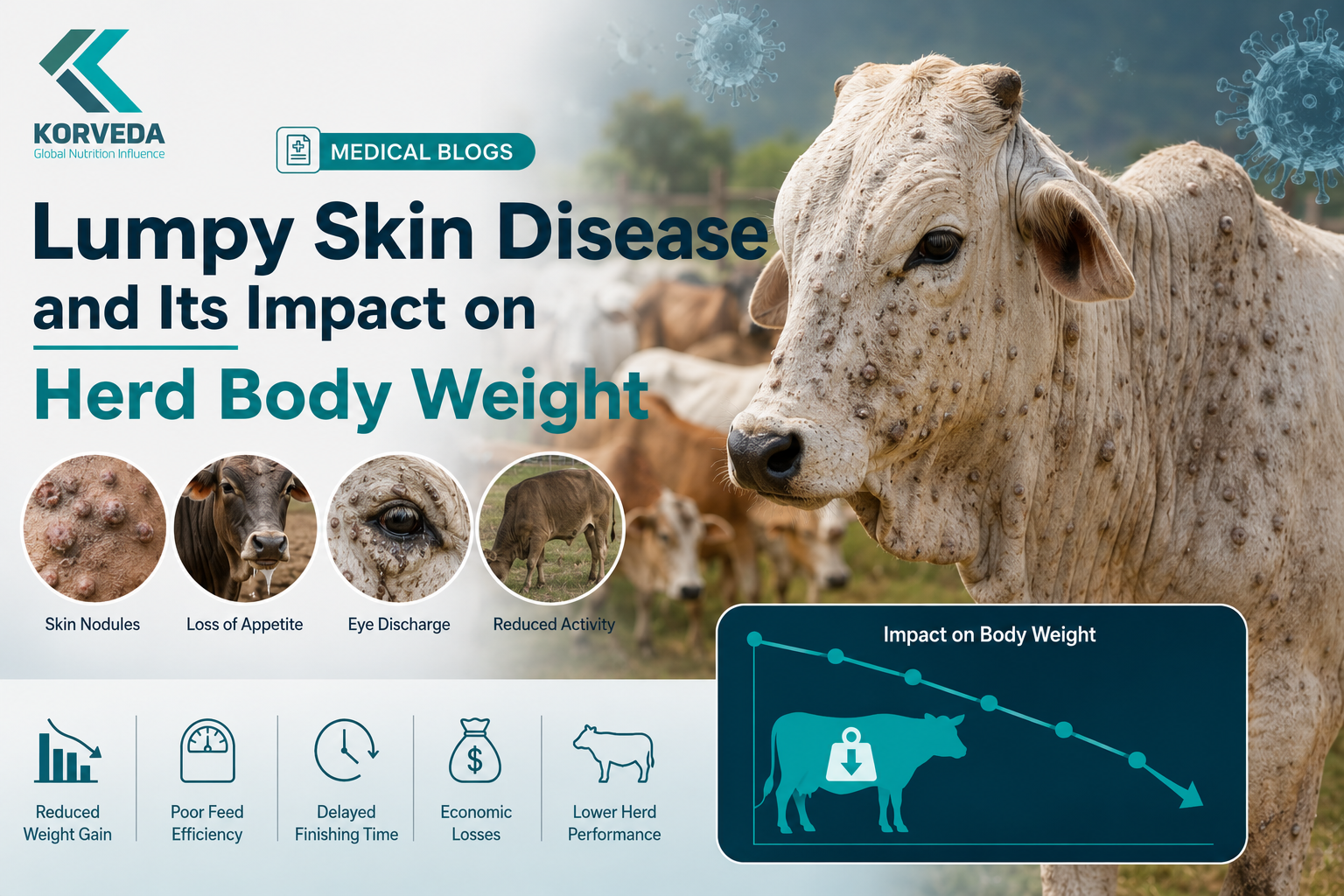
Lumpy Skin Disease and Its Impact on Herd Body Weight: The Hidden Economic Loss
Introduction
Lumpy Skin Disease (LSD) is one of the most significant viral diseases affecting cattle worldwide. Caused by the Lumpy Skin Disease Virus (LSDV), a member of the Capripoxvirus genus, the disease has become endemic in many regions across Africa, the Middle East, and Asia.
Although mortality is generally low, LSD causes substantial economic losses due to reduced weight gain, decreased milk production, infertility, hide damage, prolonged recovery, and restrictions on animal movement and trade.
How Does Lumpy Skin Disease Affect Body Weight?
One of the most important yet often underestimated consequences of LSD is its negative impact on body weight and growth performance.
Affected cattle frequently experience:
-
-
- Reduced feed intake due to fever and painful skin lesions.
- Decreased rumination and digestive efficiency.
- Increased metabolic demands caused by the immune response.
- Muscle tissue breakdown during prolonged illness.
- Slow recovery, delaying normal growth and finishing performance.
-
As a result, infected animals may lose a significant amount of body weight, while growing calves and feedlot cattle often fail to achieve their expected daily weight gain.
Economic Consequences for Beef and Dairy Farms
Weight loss directly affects farm profitability by increasing production costs and reducing market value.
Major economic impacts include:
-
- Lower average daily gain (ADG).
- Delayed finishing time in beef cattle.
- Increased feed conversion ratio (FCR).
- Reduced carcass quality.
- Lower market price due to poor body condition.
- Higher treatment and management costs.
- Extended recovery periods before animals regain optimal productivity.
Even animals that survive infection may require several weeks or months to return to their pre-infection production levels.
Why Does Weight Loss Occur?
Several biological mechanisms contribute to body weight reduction during LSD infection:
- Fever
High fever increases energy expenditure while simultaneously reducing appetite.
- Painful Skin Nodules
Painful nodules discourage movement and feeding, leading to reduced nutrient intake.
- Secondary Bacterial Infections
Skin lesions can become infected, prolonging illness and increasing nutritional requirements.
- Stress Response
Inflammation and stress hormones promote muscle protein breakdown and reduce growth.
- Reduced Feed Efficiency
Animals consume less feed while requiring more energy to support immune function, creating a negative energy balance.
Clinical Signs Associated with Poor Growth
Typical clinical signs include:
-
- Fever
- Multiple firm skin nodules
- Enlarged lymph nodes
- Nasal and ocular discharge
- Excessive salivation
- Edema of the limbs
- Lameness
- Loss of appetite
- Rapid decline in body condition
- Reduced milk production
Prevention is More Profitable Than Treatment
Since there is no specific antiviral treatment for Lumpy Skin Disease, prevention remains the most effective strategy.
Successful control programs include:
-
- Routine vaccination.
- Strict insect and vector control.
- Farm biosecurity measures.
- Isolation of infected animals.
- Rapid diagnosis and disease reporting.
- Proper nutrition to support immune function.
Well-planned vaccination programs significantly reduce disease incidence and minimize production losses.
The Role of Vaccination in Protecting Herd Performance
Vaccination is recognized as the cornerstone of Lumpy Skin Disease prevention. By reducing the likelihood and severity of infection, effective vaccination programs help protect:
- Average daily weight gain.
- Milk production.
- Reproductive performance.
- Skin quality.
- Overall herd productivity and profitability.
Maintaining herd immunity is essential for minimizing the long-term economic impact of LSD.
KORVAC Lumpy Skin Vaccine
Protecting cattle against Lumpy Skin Disease begins with an effective preventive vaccination program.
KORVAC Lumpy Skin Vaccine is developed to support herd protection against Lumpy Skin Disease Virus (LSDV) as part of comprehensive herd health management.
Key Features
- Designed for active immunization against Lumpy Skin Disease.
- Supports the development of protective immunity in cattle.
- Helps reduce the risk of disease outbreaks within vaccinated herds.
- Contributes to maintaining productivity and overall herd performance.
- Suitable for use under veterinary supervision in accordance with local vaccination programs.
Conclusion
Lumpy Skin Disease is more than a skin condition—it is a production-limiting disease that can significantly reduce body weight, delay growth, and impact farm profitability. Preventive vaccination, combined with strong biosecurity and effective herd management, remains the most reliable strategy for protecting cattle and sustaining livestock productivity.
KORVAC Lumpy Skin Vaccine supports modern disease prevention programs by helping veterinarians and producers safeguard herd health and minimize the economic impact of Lumpy Skin Disease.
Why Does Weight Loss Occur?
Several biological mechanisms contribute to body weight reduction during LSD infection:
- Fever
High fever increases energy expenditure while simultaneously reducing appetite.
- Painful Skin Nodules
Painful nodules discourage movement and feeding, leading to reduced nutrient intake.
- Secondary Bacterial Infections
Skin lesions can become infected, prolonging illness and increasing nutritional requirements.
- Stress Response
Inflammation and stress hormones promote muscle protein breakdown and reduce growth.
- Reduced Feed Efficiency
Animals consume less feed while requiring more energy to support immune function, creating a negative energy balance.
Clinical Signs Associated with Poor Growth
Typical clinical signs include:
-
-
-
- Fever
- Multiple firm skin nodules
- Enlarged lymph nodes
- Nasal and ocular discharge
- Excessive salivation
- Edema of the limbs
- Lameness
- Loss of appetite
- Rapid decline in body condition
- Reduced milk production
-
-
Prevention is More Profitable Than Treatment
Since there is no specific antiviral treatment for Lumpy Skin Disease, prevention remains the most effective strategy.
Successful control programs include:
-
- Routine vaccination.
- Strict insect and vector control.
- Farm biosecurity measures.
- Isolation of infected animals.
- Rapid diagnosis and disease reporting.
- Proper nutrition to support immune function.
Well-planned vaccination programs significantly reduce disease incidence and minimize production losses.
The Role of Vaccination in Protecting Herd Performance
Vaccination is recognized as the cornerstone of Lumpy Skin Disease prevention. By reducing the likelihood and severity of infection, effective vaccination programs help protect:
- Average daily weight gain.
- Milk production.
- Reproductive performance.
- Skin quality.
- Overall herd productivity and profitability.
Maintaining herd immunity is essential for minimizing the long-term economic impact of LSD.
KORVAC Lumpy Skin Vaccine
Protecting cattle against Lumpy Skin Disease begins with an effective preventive vaccination program.
KORVAC Lumpy Skin Vaccine is developed to support herd protection against Lumpy Skin Disease Virus (LSDV) as part of comprehensive herd health management.
Key Features
- Designed for active immunization against Lumpy Skin Disease.
- Supports the development of protective immunity in cattle.
- Helps reduce the risk of disease outbreaks within vaccinated herds.
- Contributes to maintaining productivity and overall herd performance.
- Suitable for use under veterinary supervision in accordance with local vaccination programs.
Conclusion
Lumpy Skin Disease is more than a skin condition—it is a production-limiting disease that can significantly reduce body weight, delay growth, and impact farm profitability. Preventive vaccination, combined with strong biosecurity and effective herd management, remains the most reliable strategy for protecting cattle and sustaining livestock productivity.
KORVAC Lumpy Skin Vaccine supports modern disease prevention programs by helping veterinarians and producers safeguard herd health and minimize the economic impact of Lumpy Skin Disease.
Prevention is More Profitable Than Treatment
Since there is no specific antiviral treatment for Lumpy Skin Disease, prevention remains the most effective strategy.
Successful control programs include:
-
-
-
- Routine vaccination.
- Strict insect and vector control.
- Farm biosecurity measures.
- Isolation of infected animals.
- Rapid diagnosis and disease reporting.
- Proper nutrition to support immune function.
-
-
Well-planned vaccination programs significantly reduce disease incidence and minimize production losses.
The Role of Vaccination in Protecting Herd Performance
Vaccination is recognized as the cornerstone of Lumpy Skin Disease prevention. By reducing the likelihood and severity of infection, effective vaccination programs help protect:
-
- Average daily weight gain.
- Milk production.
- Reproductive performance.
- Skin quality.
- Overall herd productivity and profitability.
Maintaining herd immunity is essential for minimizing the long-term economic impact of LSD.
Clinical Signs Associated with Poor Growth
Typical clinical signs include:
-
-
-
- Fever
- Multiple firm skin nodules
- Enlarged lymph nodes
- Nasal and ocular discharge
- Excessive salivation
- Edema of the limbs
- Lameness
- Loss of appetite
- Rapid decline in body condition
- Reduced milk production
-
-
Prevention is More Profitable Than Treatment
Since there is no specific antiviral treatment for Lumpy Skin Disease, prevention remains the most effective strategy.
Successful control programs include:
-
- Routine vaccination.
- Strict insect and vector control.
- Farm biosecurity measures.
- Isolation of infected animals.
- Rapid diagnosis and disease reporting.
- Proper nutrition to support immune function.
Well-planned vaccination programs significantly reduce disease incidence and minimize production losses.
The Role of Vaccination in Protecting Herd Performance
Vaccination is recognized as the cornerstone of Lumpy Skin Disease prevention. By reducing the likelihood and severity of infection, effective vaccination programs help protect:
- Average daily weight gain.
- Milk production.
- Reproductive performance.
- Skin quality.
- Overall herd productivity and profitability.
Maintaining herd immunity is essential for minimizing the long-term economic impact of LSD.
KORVAC Lumpy Skin Vaccine
Protecting cattle against Lumpy Skin Disease begins with an effective preventive vaccination program.
KORVAC Lumpy Skin Vaccine is developed to support herd protection against Lumpy Skin Disease Virus (LSDV) as part of comprehensive herd health management.
Key Features
-
-
- Designed for active immunization against Lumpy Skin Disease.
- Supports the development of protective immunity in cattle.
- Helps reduce the risk of disease outbreaks within vaccinated herds.
- Contributes to maintaining productivity and overall herd performance.
- Suitable for use under veterinary supervision in accordance with local vaccination programs.
-
Conclusion
Lumpy Skin Disease is more than a skin condition—it is a production-limiting disease that can significantly reduce body weight, delay growth, and impact farm profitability. Preventive vaccination, combined with strong biosecurity and effective herd management, remains the most reliable strategy for protecting cattle and sustaining livestock productivity.
KORVAC Lumpy Skin Vaccine supports modern disease prevention programs by helping veterinarians and producers safeguard herd health and minimize the economic impact of Lumpy Skin Disease.
Lumpy Skin Disease and Its Impact on Herd Body Weight: The Hidden Economic Loss
Introduction
Lumpy Skin Disease (LSD) is one of the most significant viral diseases affecting cattle worldwide. Caused by the Lumpy Skin Disease Virus (LSDV), a member of the Capripoxvirus genus, the disease has become endemic in many regions across Africa, the Middle East, and Asia.
Although mortality is generally low, LSD causes substantial economic losses due to reduced weight gain, decreased milk production, infertility, hide damage, prolonged recovery, and restrictions on animal movement and trade.
How Does Lumpy Skin Disease Affect Body Weight?
One of the most important yet often underestimated consequences of LSD is its negative impact on body weight and growth performance.
Affected cattle frequently experience:
-
- Reduced feed intake due to fever and painful skin lesions.
- Decreased rumination and digestive efficiency.
- Increased metabolic demands caused by the immune response.
- Muscle tissue breakdown during prolonged illness.
- Slow recovery, delaying normal growth and finishing performance.
As a result, infected animals may lose a significant amount of body weight, while growing calves and feedlot cattle often fail to achieve their expected daily weight gain.
Economic Consequences for Beef and Dairy Farms
Weight loss directly affects farm profitability by increasing production costs and reducing market value.
Major economic impacts include:
-
- Lower average daily gain (ADG).
- Delayed finishing time in beef cattle.
- Increased feed conversion ratio (FCR).
- Reduced carcass quality.
- Lower market price due to poor body condition.
- Higher treatment and management costs.
- Extended recovery periods before animals regain optimal productivity.
Even animals that survive infection may require several weeks or months to return to their pre-infection production levels.
Why Does Weight Loss Occur?
Several biological mechanisms contribute to body weight reduction during LSD infection:
- Fever
High fever increases energy expenditure while simultaneously reducing appetite.
- Painful Skin Nodules
Painful nodules discourage movement and feeding, leading to reduced nutrient intake.
- Secondary Bacterial Infections
Skin lesions can become infected, prolonging illness and increasing nutritional requirements.
- Stress Response
Inflammation and stress hormones promote muscle protein breakdown and reduce growth.
- Reduced Feed Efficiency
Animals consume less feed while requiring more energy to support immune function, creating a negative energy balance.
Clinical Signs Associated with Poor Growth
Typical clinical signs include:
-
- Fever
- Multiple firm skin nodules
- Enlarged lymph nodes
- Nasal and ocular discharge
- Excessive salivation
- Edema of the limbs
- Lameness
- Loss of appetite
- Rapid decline in body condition
- Reduced milk production
Prevention is More Profitable Than Treatment
Since there is no specific antiviral treatment for Lumpy Skin Disease, prevention remains the most effective strategy.
Successful control programs include:
-
- Routine vaccination.
- Strict insect and vector control.
- Farm biosecurity measures.
- Isolation of infected animals.
- Rapid diagnosis and disease reporting.
- Proper nutrition to support immune function.
Well-planned vaccination programs significantly reduce disease incidence and minimize production losses.
The Role of Vaccination in Protecting Herd Performance
Vaccination is recognized as the cornerstone of Lumpy Skin Disease prevention. By reducing the likelihood and severity of infection, effective vaccination programs help protect:
- Average daily weight gain.
- Milk production.
- Reproductive performance.
- Skin quality.
- Overall herd productivity and profitability.
Maintaining herd immunity is essential for minimizing the long-term economic impact of LSD.
KORVAC Lumpy Skin Vaccine
Protecting cattle against Lumpy Skin Disease begins with an effective preventive vaccination program.
KORVAC Lumpy Skin Vaccine is developed to support herd protection against Lumpy Skin Disease Virus (LSDV) as part of comprehensive herd health management.
Key Features
- Designed for active immunization against Lumpy Skin Disease.
- Supports the development of protective immunity in cattle.
- Helps reduce the risk of disease outbreaks within vaccinated herds.
- Contributes to maintaining productivity and overall herd performance.
- Suitable for use under veterinary supervision in accordance with local vaccination programs.
Conclusion
Lumpy Skin Disease is more than a skin condition—it is a production-limiting disease that can significantly reduce body weight, delay growth, and impact farm profitability. Preventive vaccination, combined with strong biosecurity and effective herd management, remains the most reliable strategy for protecting cattle and sustaining livestock productivity.
KORVAC Lumpy Skin Vaccine supports modern disease prevention programs by helping veterinarians and producers safeguard herd health and minimize the economic impact of Lumpy Skin Disease.
- Medical Blogs
- June 22, 2020
You may also like
Other related posts
Leave a comment Cancel reply
You must be logged in to post a comment.